
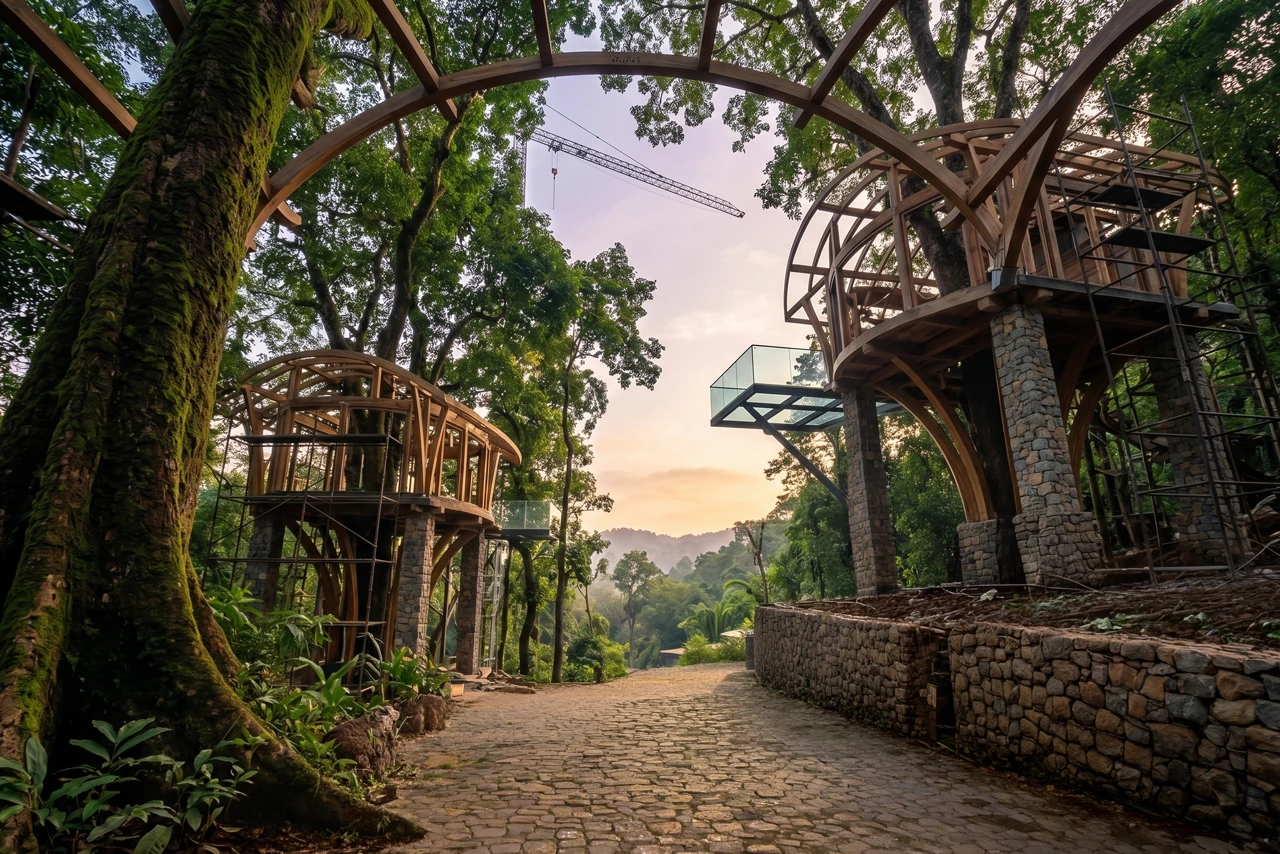
The evolution of hospitality has moved beyond comfort and aesthetics. Today, travellers seek experiences that are immersive, responsible, and deeply connected to their surroundings. This shift has brought luxury wildlife properties particularly jungle camps and nature-led resorts into sharper focus.
When planned and executed with clarity, these developments do more than attract travellers. They become catalysts for regional growth, environmental awareness, and sustainable economic activity.
Redefining Tourism Through Experience-Led Stays
Traditional tourism often revolves around destinations. Wildlife properties, however, transform the journey into the destination itself.
Luxury jungle camps and nature resorts are designed to offer:
- Close interaction with natural landscapes
- Carefully curated outdoor and wildlife experiences
- A sense of exclusivity away from urban environments
This form of hospitality appeals to both domestic and international travellers who value authenticity over standardised luxury. As a result, such properties elevate the overall positioning of a region, making it more desirable and competitive in the tourism ecosystem.
Creating Awareness Around Natural Ecosystems
One of the most significant contributions of wildlife hospitality lies in awareness.
Well-designed properties subtly educate guests about:
- Local flora and fauna
- Conservation practices
- The importance of ecological balance
Unlike traditional awareness campaigns, this learning is experiential. Guests witness ecosystems firsthand, making the impact more lasting and meaningful. Over time, this fosters a more responsible class of travellers who carry these insights forward.
Supporting Local Economies in a Structured Way
Luxury wildlife developments have a direct and indirect economic impact on surrounding communities.
1. Employment Generation
From construction to daily operations, these projects create opportunities for:
- Skilled and semi-skilled labour
- Local guides and naturalists
- Hospitality staff and service providers
2. Encouraging Local Supply Chains
Many wildlife properties consciously integrate local sourcing:
- Food and agricultural produce
- Handcrafted décor and furnishings
- Regional materials used in construction
This strengthens local businesses and ensures that economic benefits circulate within the region.
3. Infrastructure Development
With the rise of such properties, supporting infrastructure also improves:
- Roads and connectivity
- Basic utilities
- Ancillary tourism services
This not only benefits the hospitality sector but also enhances the quality of life for local residents.
Balancing Development with Environmental Responsibility
The success of wildlife properties depends on their ability to coexist with nature, not overpower it.
Thoughtful planning ensures:
- Minimal disturbance to natural habitats
- Controlled land use and low-density development
- Integration of natural materials and climate-responsive design
When executed responsibly, these projects demonstrate that development and environmental sensitivity can align effectively.
Positioning Regions on the Global Tourism Map
Luxury wildlife properties often act as anchor developments for lesser-known destinations.
A well-developed jungle camp or nature resort can:
- Attract international travellers
- Generate media and digital visibility
- Encourage further investment in the region
Over time, this creates a ripple effect, transforming emerging locations into recognised tourism hubs.
The Role of Strategic Planning and Execution
While the potential is significant, the outcome depends heavily on how these projects are conceived and delivered.
Key factors include:
- Site-sensitive planning and layout design
- Efficient construction tailored to remote locations
- Seamless integration of hospitality functionality
- Long-term operational viability
Without this foundation, even the most scenic location can fail to deliver its true value.
Conclusion
Luxury wildlife properties represent a powerful intersection of hospitality, environment, and economic development. When approached with intent and expertise, they go beyond offering stays—they shape destinations, support communities, and build awareness that extends far beyond the property itself.
As the demand for meaningful travel continues to grow, such developments will play an increasingly important role in defining the future of tourism.